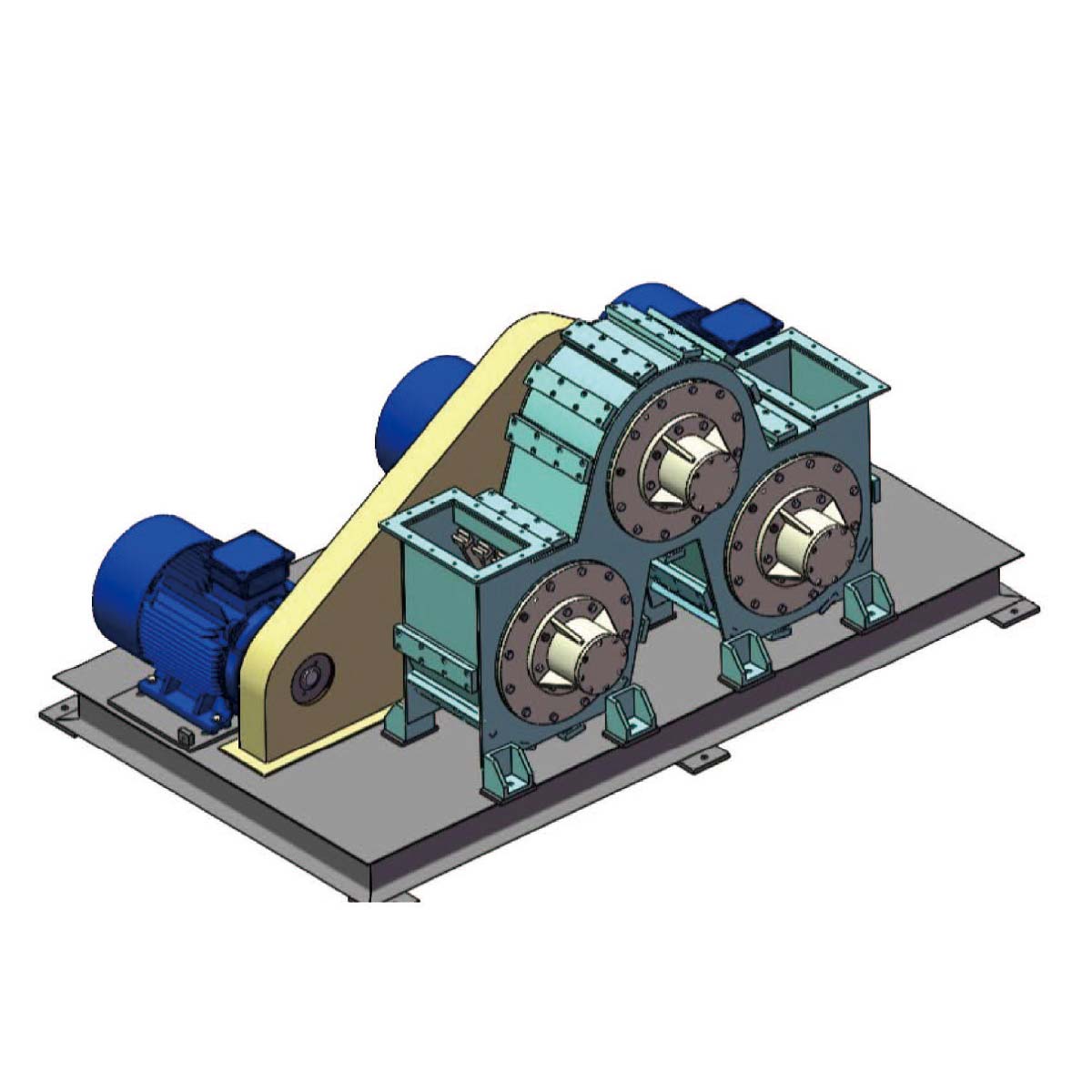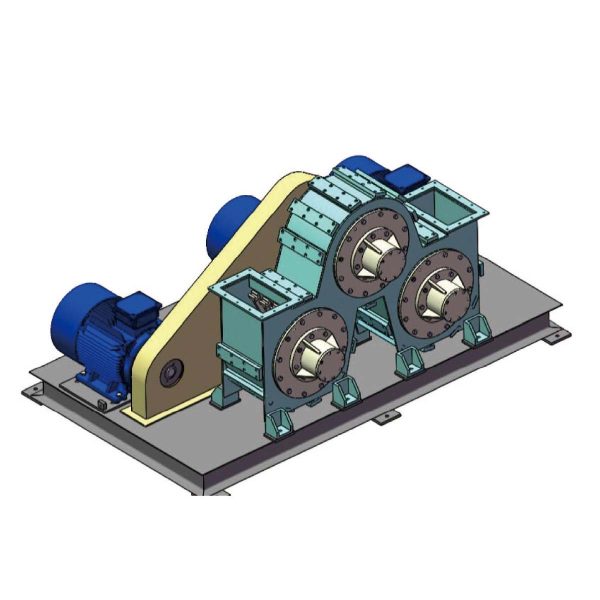
Three-roller Mill Modification Process

The three-roll mill modification process leverages the relative motion of three rotors. By adjusting the action mode of cyclones and eddies inside the equipment, it achieves surface coating modification of powder particles.

How it works

The three-roll mill calcium carbonate modification process relies on the relative motion of three rotors. By regulating the action mode of cyclones and eddies inside the equipment, it achieves surface coating modification of calcium carbonate particles synchronously during the powder dispersion process. This process is compatible with mainstream calcium carbonate types such as precipitated calcium carbonate (PCC) and ground calcium carbonate (GCC). It does not require additional heating devices, featuring significantly lower initial equipment investment costs than similar modification equipment. Subsequent operational energy consumption and maintenance costs are also more manageable, which meets the production demand for cost reduction and efficiency improvement in the calcium carbonate industry.

Performance and features

Mature and Cost-Effective Process

The technology is mature and stable in application, with low equipment investment cost, and is particularly suitable for the coating modification of calcium carbonate powder with stearic acid-based modifiers.

High-Efficiency Self-Friction Heat Generation

It relies on the heat generated by friction between the rotors and calcium carbonate materials as well as between the materials themselves, eliminating the need for additional heating devices, reducing auxiliary equipment, and greatly simplifying the calcium carbonate modification process flow.

Clear Particle Size Adaptation Range

It is specially designed for the surface modification of 325–1250 mesh calcium carbonate powder, with well-defined particle size adaptation boundaries to meet the processing needs of powder within this range.

Insufficient Powder Dispersion Performance

The equipment has relatively low air volume, resulting in poor dispersibility of calcium carbonate powder. Fine powder particles are highly prone to agglomeration, requiring an increased dosage of modifiers to ensure coating effectiveness.

Difficulty in Modification Temperature Control

Relying on the self-friction heat generation mode, the temperature is easily affected by factors such as feed rate and ambient temperature, making it difficult to precisely control the calcium carbonate modification temperature and potentially causing product quality fluctuations.

Limited Overall Coating Efficiency

There are material dead zones inside the equipment, where some calcium carbonate particles cannot fully contact the modifiers, leading to a low overall coating rate and affecting the consistency of product performance.

Technical Parameters

Parameters / Model JSGX200300600900
Main motor power (kW)4×318.5×337×375×3
Fan power (kW)2.25.52230
Main shaft speed (rpm)6000450027002000
Output (kg/h)20~80500~15001000~30002500~6000

Related Machines & equipment

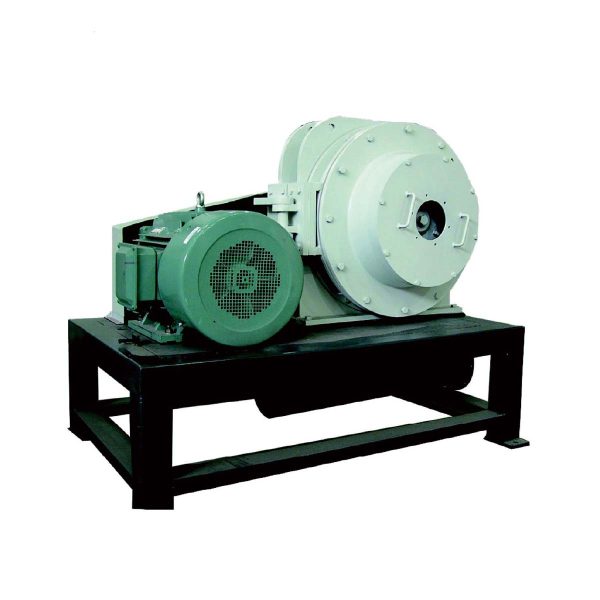
Cyclone Mill Modification Process
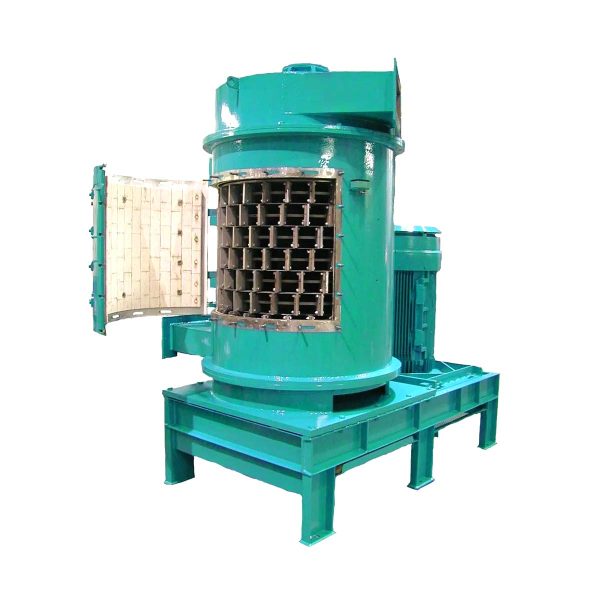
This calcium carbonate modification process using a cyclone mill boasts prominent advantages. Its strong airflow cyclone effect ensures full contact between modifiers and calcium carbonate particles, enabling efficient and uniform dispersion and coating. Equipped with an adjustable classification structure, it has a wide particle size adaptability range. Combined with variable frequency temperature control design, it guarantees stable product quality. The automatic feeding system reduces costs and improves efficiency. The flexible process is compatible with upstream and downstream procedures, integrating multiple functions for energy conservation and easy maintenance.

Turbo Mill Modification Process

When the equipment operates at high speed, it will strongly drive the airflow inside the chamber to form a powerful air flow field, accurately guiding and retaining the originally agglomerated and adhered calcium carbonate powder particles in the specially designed grooved stator structure inside the equipment. The air pressure and wind speed of the airflow are coupled and synergistically act...

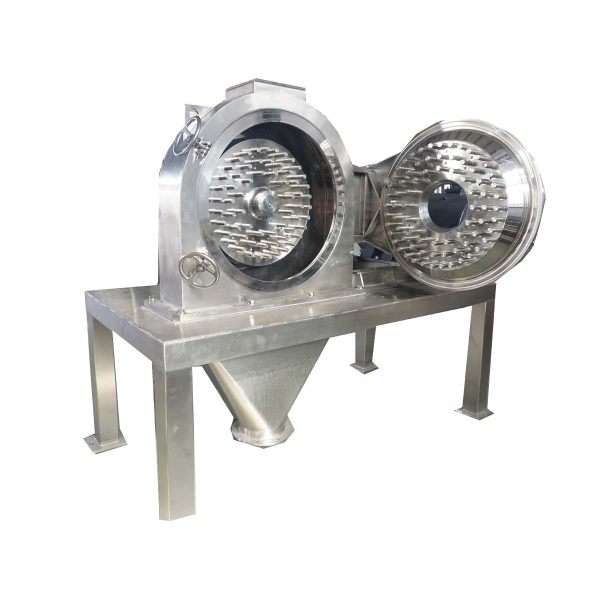
Pin Mill Modification Process

The pin mill is a high-efficiency ultrafine grinding and **integrated modification equipment**. Its core consists of two grinding discs that can rotate independently at high speed (or one rotating and one stationary), with needle-shaped/tooth-shaped elements evenly distributed on the disc surfaces. For calcium carbonate powder processing requirements, during operation, the relative high-speed movement of the two discs generates intense shearing,...

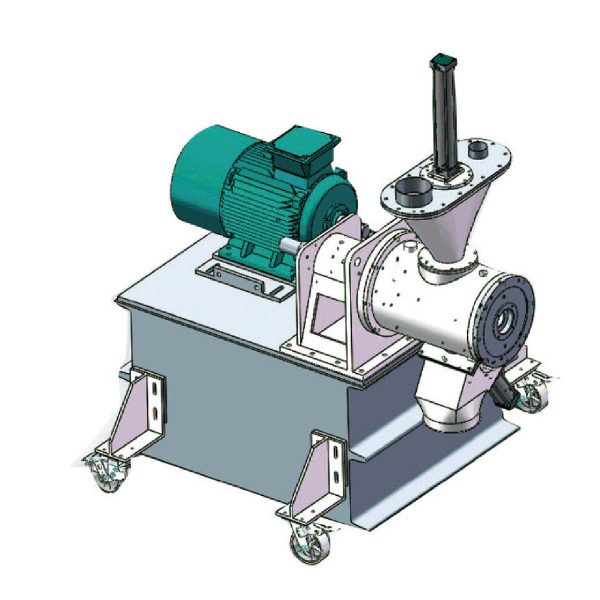
Mechanical Fusion Machine Modification Process

This equipment adopts a batch operation mode, making it particularly suitable for the modification scenarios of calcium carbonate powder with additives such as silanes that require high temperature and long reaction time. It is equipped with built-in heating and timing devices to precisely control the temperature and reaction duration of calcium carbonate modification. The inner lining can be made of optional ceramic materials to achieve zero metal contamination of calcium carbonate powder. It drives the full mixing and integration of calcium carbonate materials and modifiers through mechanical force, enhancing the coating modification effect.