CaCO3
JACAN

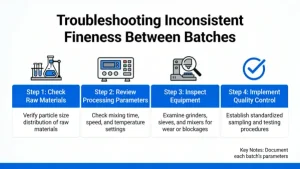
How to troubleshoot inconsistent fineness from batch to batch

Fineness variation between batches almost always comes from unstable feeding, classifier performance, raw material, or air-circulation system. Below is a practical, step-by-step troubleshooting guide. 1. Raw Material & Feeding (Most Common Root Cause) Moisture fluctuation Wet material → agglomeration → poor grinding → coarser powder. Hardness / particle size variation of raw ore Uneven feeding rate Feeder slip, blockage, silo bridging, inconsistent feed speed. Check: Standardize raw material moisture (usually < 1%). Verify feeder output with belt scale / gravimetric feeder. 2. Classifier (Separator) — Directly Controls Fineness Unstable classifier speed (inverter fault, motor drift) Worn classifier blades → low classification efficiency Improper air volume Too much air → overly fine; too little air → overly coarse. Check: Fix classifier…

Fineness variation between batches almost always comes from unstable feeding, classifier performance, raw material, or air-circulation system. Below is a practical, step-by-step troubleshooting guide.

1. Raw Material & Feeding (Most Common Root Cause)

  • Moisture fluctuation

    Wet material → agglomeration → poor grinding → coarser powder.

  • Hardness / particle size variation of raw ore
  • Uneven feeding rate

    Feeder slip, blockage, silo bridging, inconsistent feed speed.

Check:
  • Standardize raw material moisture (usually < 1%).
  • Verify feeder output with belt scale / gravimetric feeder.

2. Classifier (Separator) — Directly Controls Fineness

  • Unstable classifier speed (inverter fault, motor drift)
  • Worn classifier blades → low classification efficiency
  • Improper air volume

    Too much air → overly fine; too little air → overly coarse.

Check:
  • Fix classifier speed and air volume as fixed parameters.
  • Inspect blade wear and rotor balance.

3. Grinding Main Unit

  • Grinding roller / ball wear

    Reduced crushing force → unstable fineness.

  • Insufficient grinding medium
  • Main motor power / load fluctuation
Check:
  • Roller pressure, roller sleeve wear, grinding disc/liner condition.
  • Keep stable load during operation.

4. Air & Dust Collection System

  • Air leakage in pipes, cyclone, mill body
  • Bag filter partial blockage

    Increases system resistance → changes air velocity → fineness shifts.

  • Fan performance drift
Check:
  • System pressure difference (ΔP).
  • Clean or replace filter bags.

5. Operation & Sampling Error

  • Frequent manual parameter adjustments between shifts
  • Non-representative sampling
  • Particle analyzer not calibrated
Fix:
  • Use fixed process recipe (one set of stable parameters).
  • Calibrate particle size analyzer regularly.

Quick Priority Check (From Fastest to Most Effective)

  1. Classifier speed & system air volume
  2. Feeding rate uniformity
  3. Raw material moisture & hardness
  4. Roller/grinding medium wear
  5. Air leakage and bag filter blockage

About Us:
With over 20 years of dedicated expertise in ultrafine grinding technology, we deliver high-performance machinery that matches the precision and reliability of leading German and Japanese brands—at only 1/3 of their cost.

Beyond Equipment, We Deliver Total Confidence:
We provide Free Material Testing to ensure precise equipment selection, followed by professional on-site installation and comprehensive training. Our 24/7 technical support team ensures your production line remains efficient and worry-free.

Schedule Material Trial & Get a Customized Solution from Us
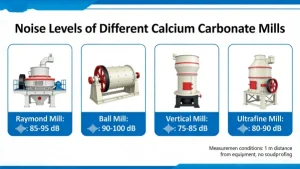
What is the noise level of different types of calcium carbonate mills?
1. Ball Mill Noise Level: 95-120 dB(A) This is one of the loudest industrial grinding...
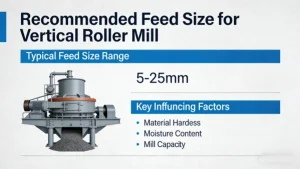
What is the recommended feed size for a vertical roller mill?
The recommended feed size for a vertical roller mill (VRM) varies significantly based on the...
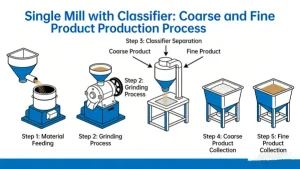
How to produce both coarse and fine products from a single mill with a classifier
To produce both coarse and fine products simultaneously from a single mill, you need a...