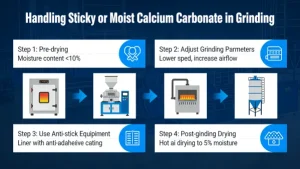
To handle sticky or moist calcium carbonate during grinding, implement a 3-tier control strategy: pre-grinding moisture management (target ≤0.5–1.5% for dry grinding), in-process anti-sticking solutions (equipment design + additives), and post-grinding flow enhancement. Below is a structured, actionable guide.
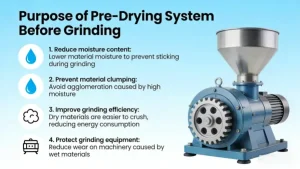
1. Pre-Grinding Moisture Control (Critical First Step)
| Method | Application | Optimal Parameters | Expected Result |
|---|---|---|---|
| Pre-drying | All dry grinding processes | Rotary dryer: 100–150°C, 1–3 hours; Flash dryer: 180–250°C, 10–30 seconds | Reduce moisture to ≤1.5% (ideal ≤0.5%) |
| Raw material selection | Seasonal variations | Prioritize low-moisture deposits; store under cover | Prevent initial high moisture intake |
| Moisture monitoring | All processes | Install online moisture sensors at feed | Real-time control; avoid over/under drying |
Key threshold: For dry grinding, moisture >2% causes severe sticking and agglomeration .
2. Equipment & Process Modifications for Sticky Materials
Dry Grinding Solutions
- Mill selection:
- Use high-pressure roller mills with V-grooved/rippled roller surfaces (enhance material flow)
- Fluidized bed jet mills: superior for sticky materials (minimal contact with walls)
- Modified Raymond mills: add air classification and hot air injection
- Process adjustments:
- Increase mill airflow rate (+20–30%) to carry moisture away
- Reduce feed rate (-15–25%) to prevent overloading and local heating
- Implement intermittent operation + cooling cycles (control mill temperature < material Tg – 20°C)
- Adjust classifier speed (finer grind may require higher speed but watch for overheating)
Wet Grinding Solutions (for ultrafine applications)
- Use water as grinding medium (avoids dry sticking issues)
- Add dispersants (0.1–0.5%): sodium polyacrylate, polyphosphates, or ammonium polyacrylate
- Maintain slurry concentration 60–75% solids for optimal flow and grinding efficiency
3. Additives for Anti-Sticking & Flow Enhancement
| Additive Type | Dosage | Mechanism | Best Applications |
|---|---|---|---|
| Hydrophobic agents | 0.1–0.3% | Create water-repellent surface; reduce particle adhesion | Dry grinding; moisture 0.5–1.5% |
| Grinding aids | 0.05–0.2% | Prevent agglomeration; reduce surface energy | Both dry/wet grinding |
| Anti-caking agents | 0.1–0.5% | Physical separation; absorb excess moisture | Post-grinding handling |
| Surface modifiers | 0.2–1.0% | Chemically modify surface; improve compatibility | High-value applications (plastics, coatings) |
Recommended formulations:
- Dry grinding: 0.2% stearic acid + 0.1% hydrophobic silica
- Wet grinding: polyacrylate-based dispersants (P(AA/AMPS) copolymers)
4. Operational Best Practices
-
Temperature control:
- Keep mill internal temp <80°C (critical for calcium carbonate)
- Install cooling jackets on mill body and classifier
-
Cleaning protocols:
- Implement scheduled cleaning cycles (every 4–8 hours for high-moisture feeds)
- Use compressed air blowers for hard-to-reach areas (avoid water in dry systems)
- Apply anti-stick coatings (PTFE, ceramic) to mill internals
-
Grinding sequence optimization:
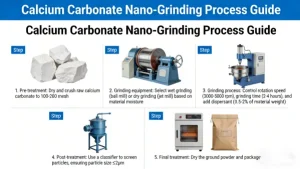
- Two-stage grinding: coarse grind (moisture-sensitive) → drying → fine grind
- For extremely sticky materials: add 5–10% dry recycled powder to feed (acts as “carrier”)
5. Troubleshooting Guide for Specific Issues
| Problem | Root Cause | Immediate Fix | Long-Term Solution |
|---|---|---|---|
| Mill wall sticking | Moisture >1.5%; temperature >70°C | Reduce feed rate; increase airflow; cool mill | Pre-dry to <0.5%; modify mill surface |
| Product agglomeration | Surface moisture; static charge | Add 0.2% hydrophobic silica; check grounding | Improve drying; add anti-static agent |
| Classifier blockage | Sticky particles adhering to blades | Stop; clean classifier; adjust speed | Optimize hot air supply; add grinding aid |
| Low throughput | Material bridging in feed | Vibrate feeder; reduce moisture | Install dehumidification at feed |
6. Advanced Solutions for Persistent Issues
-
Electrostatic control:
- Install ionizers at mill exit to neutralize static charges
- Ensure proper equipment grounding (critical for fine powders)
-
Hybrid grinding systems:
- Combine dry pre-grinding + wet fine grinding for high-moisture raw materials
- Use steam-assisted grinding (controlled moisture addition for better grindability in some cases)
-
Material coating:
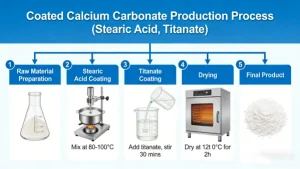
- Post-grinding treatment with stearates or silanes (0.3–0.8%) for moisture-resistant finish
Implementation Checklist
- Test raw material moisture: ≤0.5% ideal for dry grinding; ≤1.5% acceptable
- Select appropriate mill type for moisture level:
- <0.5%: Any mill type
- 0.5–1.5%: High-pressure roller mill or fluidized bed jet mill
- >1.5%: Wet grinding or pre-dry thoroughly
- Add anti-sticking agent (0.1–0.3%) if moisture >0.5%
- Optimize airflow and temperature control
- Schedule regular cleaning and maintenance