
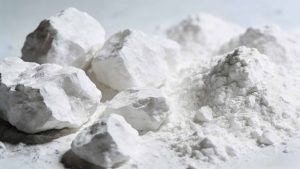
In the mineral processing field, ultrafine grinding technology has become a core means to enhance mineral added value—whether it is general minerals such as quartz sand and calcium carbonate, or special minerals such as spodumene and kaolin, ultrafine grinding enables their wide application in downstream industries including building materials, lithium batteries, and coatings. However, with a wide variety of minerals and significant differences in hardness and particle size requirements, improper selection of ultrafine grinders may lead to problems such as low grinding efficiency, excessive energy consumption, and unqualified particle size. Combining JACAN Technology’s 20 years of mineral processing experience, this article focuses on two core dimensions—”particle size requirements” and “material hardness”—and shares targeted selection tips to help you accurately match equipment.
1. First Clarify Particle Size Requirements: Lock Grinding Precision by Application Scenarios
The core goal of mineral ultrafine grinding is to obtain powder with a specific particle size. The particle size requirements of different downstream applications directly determine the direction of equipment selection. Before selection, it is necessary to clarify the “target particle size range” and “particle size distribution requirements” to avoid blindly pursuing “the finer the better” and balance precision and efficiency:
- Building materials and coatings industry (e.g., heavy calcium carbonate processing): Usually requires a particle size of 1-10μm, with a focus on powder fluidity. A conventional high-efficiency ultrafine grinder can be selected without excessive pursuit of extreme precision to control energy consumption costs;
- Lithium battery and electronic materials industry (e.g., spodumene and graphite processing): Requires a particle size ≤5μm and uniform particle size distribution (coefficient of variation CV≤10%). An intelligent ultrafine grinder with precise classification function should be selected, combined with a multi-stage classification system to ensure particle size consistency;
- High-end ceramics and refractory materials industry (e.g., alumina and zirconia processing): Often requires sub-micron powder (0.1-1μm). An upgraded ultrafine grinder equipped with German UPG technology and a high-frequency impact grinding structure should be used to achieve ultrafine grinding and narrow distribution control.
Targeting different particle size requirements in the mineral industry, JACAN Technology has developed a variety of special equipment, which can achieve full particle size coverage of 0.1μm-10μm. The grinding chamber is seamlessly connected with the classifier to avoid over-grinding and improve product yield.

2. Adapt to Material Hardness: Select Core Configurations by Mineral Mohs Hardness
Mineral hardness is a key factor affecting the grinding efficiency and wear degree of ultrafine grinders. The grinding structure, material, and power configuration of the equipment should be selected according to the Mohs hardness value. The core references are as follows:
2.1 Low-Hardness Minerals (Mohs Hardness 1-3, e.g., Talc, Gypsum, Graphite)
- Characteristics: Soft texture, easy to crush, little wear to equipment during grinding, but prone to wall sticking and agglomeration;
- Selection Suggestions: Choose a “low-temperature grinding + flexible impact” type ultrafine grinder equipped with polymer wear-resistant liners to avoid metal impurity contamination; at the same time, optimize the ventilation structure of the grinding chamber to reduce material wall sticking. JACAN’s such equipment can achieve a processing capacity of 200-500kg/h with energy consumption as low as 30-50kWh/ton, suitable for small-batch to large-scale production.
2.2 Medium-Hardness Minerals (Mohs Hardness 4-6, e.g., Quartz Sand, Feldspar, Kaolin)
- Characteristics: Moderate hardness, medium crushing difficulty, requiring a balance between grinding efficiency and equipment wear resistance;
- Selection Suggestions: Use an ultrafine grinder with a “impact + shear” composite grinding structure. The grinding rotor is made of high-chromium alloy material to enhance wear resistance; the power configuration is recommended to choose a 55-110kW motor to ensure sufficient grinding force. JACAN’s such equipment has served many quartz sand processing enterprises, enabling stable output of 1-5μm particle size and equipment service life of more than 8000 hours.
2.3 High-Hardness Minerals (Mohs Hardness 7-9, e.g., Corundum, Silicon Carbide, Garnet)
- Characteristics: Hard texture, high crushing difficulty, severe wear on equipment grinding parts, requiring strong grinding force and high wear-resistant configuration;
- Selection Suggestions: Prioritize a “high-pressure impact + classification cycle” type ultrafine grinder equipped with cemented carbide grinding hammers and ceramic liners to reduce wear; at the same time, configure a frequency conversion speed regulation system to adjust the rotor speed (1500-3000r/min) according to material hardness, improving grinding efficiency. JACAN’s customized equipment for high-hardness minerals can achieve particle size processing below 5μm, and the replacement cycle of wearing parts is extended by 30%, reducing maintenance costs.
3. Additional Considerations for Selection in the Mineral Industry
- Wear Resistance and Purity Control: In mineral processing, it is necessary to avoid powder contamination caused by equipment wear. Especially for high-purity demand scenarios (e.g., electronic-grade minerals), equipment with a non-metallic contact grinding structure or ceramic/polymer liners should be selected;
- Capacity Matching: Combine the scale of your own production line to select models with a single equipment processing capacity of 50kg/h-10 tons/h. JACAN supports multi-equipment linkage to form a production line to meet large-scale production needs;
- Environmental Protection and Energy Consumption: Prioritize equipment with zero dust leakage and energy consumption lower than the industry average. JACAN’s ultrafine grinders adopt a closed grinding + pulse dust removal system, meeting dust emission standards, and energy consumption is 15-20% lower than traditional equipment;
- Customized Adaptation: Some special minerals (e.g., acicular minerals, heat-sensitive minerals) require special processes. JACAN’s team of more than 150 engineers can optimize the equipment structure according to mineral characteristics, having formed more than 1000 material processing solutions.
The core of ultrafine grinder selection in the mineral industry is “accurate matching”—determine equipment precision by particle size requirements, core configurations by material hardness, and make comprehensive decisions combined with additional requirements such as capacity, environmental protection, and purity. As an enterprise specializing in ultrafine grinding equipment for 20 years, JACAN Technology’s equipment quality is comparable to that of German and Japanese brands, with a price only 1/3 of theirs. It also provides 24/7 after-sales service, on-site installation and training, and free material testing services, ensuring worry-free selection and use.