CaCO3
JACAN

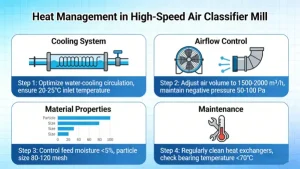
How to manage the heat generated in a high-speed air classifier mill

To effectively manage heat in a high-speed air classifier mill, implement a multi-layered strategy combining equipment design,active cooling systems,operational controls,real-time monitoring, and maintenance protocols. Target outlet temperatures of 35–45°C for heat-sensitive materials and <60°C for general applications to prevent product degradation and equipment damage. 1. Understand Heat Sources Heat generation in ACMs stems from: Source Mechanism Contribution Mechanical friction Rotor, classifier wheel, bearings ~30–40% Impact energy conversion Hammer/particle collisions ~25–35% Air compression High-velocity airflow in grinding chamber ~20–25% Motor inefficiency Electric motor heat transfer ~10–15% Material properties High-moisture or high-specific-heat materials Variable 2. Equipment Design Solutions Cooling Integration Dual cooling system: Combine water jacket cooling for the grinding chamber with air cooling for internal components to maintain 35–45°C outlet temps…

To effectively manage heat in a high-speed air classifier mill, implement a multi-layered strategy combining equipment design,active cooling systems,operational controls,real-time monitoring, and maintenance protocols. Target outlet temperatures of 35–45°C for heat-sensitive materials and <60°C for general applications to prevent product degradation and equipment damage.

1. Understand Heat Sources

Heat generation in ACMs stems from:

Source Mechanism Contribution
Mechanical friction Rotor, classifier wheel, bearings ~30–40%
Impact energy conversion Hammer/particle collisions ~25–35%
Air compression High-velocity airflow in grinding chamber ~20–25%
Motor inefficiency Electric motor heat transfer ~10–15%
Material properties High-moisture or high-specific-heat materials Variable

2. Equipment Design Solutions

Cooling Integration

  • Dual cooling system: Combine water jacket cooling for the grinding chamber with air cooling for internal components to maintain 35–45°C outlet temps
  • Jacketed housing: Install spiral or baffle-type cooling channels in the chamber walls and classifier housing
  • Cooled classifier wheel: Use hollow, internally cooled wheels with recirculating cooling fluid
  • Bearing protection: Outboard-mounted bearings with air purge systems and insulation for high-temperature environments

Material & Structural Optimization

  • High thermal conductivity materials: Use copper alloys, aluminum, or stainless steel with embedded cooling passages
  • Aerodynamic design: Optimize rotor geometry to minimize turbulence and pressure drop while maximizing heat transfer
  • Larger surface area: Add external fins or heat sinks to the grinding chamber exterior

3. Active Cooling Systems

Process Air Cooling

Method Implementation Temperature Reduction Best For
Chilled inlet air Pre-cool process air to 5–15°C using refrigeration 20–30°C Heat-sensitive materials (polymers, pharmaceuticals)
Heat exchanger integration Install shell-and-tube or plate heat exchangers in air circuit 15–25°C Closed-loop systems
Adiabatic cooling Inject controlled amounts of atomized water (for non-hygroscopic materials) 10–20°C Mineral processing
Inert gas cooling Use pre-cooled nitrogen/argon (-10–5°C) in closed-loop 25–35°C Explosive or oxygen-sensitive materials

Closed-Loop Air Circulation

  • Recirculate and condition process air with heat exchangers and dehumidifiers
  • Maintain 2–3 air changes per minute while minimizing makeup air requirements
  • For explosive materials: Use 100% inert gas (N₂) with oxygen monitoring (<8% O₂)

4. Operational Control Strategies

Airflow Management

  • Optimize air-to-material ratio: Maintain 3–6 m³/kg for most materials; higher ratios (5–8 m³/kg) for heat-sensitive products
  • Variable frequency drives (VFDs): Adjust fan speed to control airflow while monitoring temperature rise (<15°C from inlet to outlet)
  • Pre-conditioned inlet air: Dehumidify to <40% RH to prevent condensation and improve cooling efficiency

Processing Parameters Adjustment

Parameter Adjustment Temperature Effect
Rotor speed Reduce by 10–15% for heat-sensitive materials -8 to -12°C
Feed rate Optimize to avoid overloading; use star feeders for consistent flow -5 to -10°C
Classifier speed Balance fineness requirements with heat generation -3 to -7°C
Grinding gap Increase slightly (0.5–1.0 mm) to reduce friction -4 to -8°C

Sequential Processing

  • Batch grinding with cooling intervals: For temperature-critical materials, alternate 15–20 minute grinding cycles with 5–10 minute cooling periods
  • Pre-cool material: Chill feed to 5–15°C before grinding for highly heat-sensitive products

5. Real-Time Monitoring & Control

Sensor Placement

  • Inlet/outlet air temperature: Measure at chamber entrance and classifier exit (±0.5°C accuracy)
  • Grinding chamber wall temperature: Multiple points to detect hotspots
  • Bearing temperature: Monitor at housing (alarm at >75°C, shutdown at >85°C)
  • Motor winding temperature: Prevent insulation breakdown

Automated Control System

  • PID temperature controllers: Maintain setpoint by regulating cooling water flow and inlet air temperature
  • Interlocks:
    • Shutdown if outlet temp exceeds 60°C (adjust based on material)
    • Reduce feed rate if temp rises >10°C above baseline
    • Increase cooling water flow if chamber wall temp >55°C

6. Maintenance & Housekeeping

Routine Maintenance

  • Lubrication optimization: Use high-temperature synthetic lubricants (>150°C rating) for bearings
  • Seal inspection: Ensure airtight seals to prevent ambient air ingress and pressure leaks
  • Cooling system cleaning: Descaling of water jackets quarterly; filter replacement monthly
  • Rotor balancing: Minimize vibration-induced friction and heat generation

Operational Best Practices

  • Pre-start checks: Verify cooling system pressure (2–3 bar for water), flow rates, and temperature settings
  • Gradual startup: Ramp up to operating speed over 5–10 minutes to avoid thermal shock
  • Post-shutdown cooling: Run cooling systems for 15–20 minutes after stopping the mill

7. Advanced Solutions for Extreme Cases

Cryogenic Grinding

  • Use liquid nitrogen (-196°C) injection for temperature-sensitive materials like pharmaceuticals or specialty chemicals
  • Install vaporizers and pressure regulators to maintain consistent cooling effect
  • Note: Increases operational costs by 30–50% but enables processing of otherwise ungrindable materials

Heat Recovery Systems

  • Capture waste heat for facility heating or preheating of non-heat-sensitive materials
  • Use heat exchangers to transfer mill heat to process water (efficiency 60–75%)

8. Troubleshooting Heat-Related Issues

Problem Cause Solution
Rapid temperature rise (>25°C above normal) Insufficient cooling water flow Check valves, pumps, clean heat exchanger coils
Localized hotspots Uneven wear on rotor or classifier Inspect and replace worn parts; rebalance
Temperature fluctuations Inconsistent feed rate Install variable-speed feeder with load monitoring
Excessive bearing temperature Lubrication failure or misalignment Re-lubricate; check alignment; replace bearings if needed

Implementation Guide: Step-by-Step Heat Management

  1. Baseline assessment: Measure temperature profile under standard operating conditions
  2. Prioritize solutions:
    • Short-term: Optimize airflow and process parameters (1–2 weeks)
    • Medium-term: Install heat exchangers and monitoring systems (1–2 months)
    • Long-term: Upgrade to dual cooling system or closed-loop design (3–6 months)
  3. Validation: Test each modification while monitoring temperature, product quality, and energy consumption
  4. Documentation: Maintain records of temperature data, adjustments, and material quality to establish optimal parameters

Key Takeaways

Effective heat management in high-speed air classifier mills requires a holistic approach combining design, operational, and monitoring strategies. Prioritize closed-loop air systems with integrated cooling for most applications, and implement real-time temperature control to prevent product degradation and equipment damage. Always validate solutions against both thermal performance and final product specifications.

About Us:
With over 20 years of dedicated expertise in ultrafine grinding technology, we deliver high-performance machinery that matches the precision and reliability of leading German and Japanese brands—at only 1/3 of their cost.

Beyond Equipment, We Deliver Total Confidence:
We provide Free Material Testing to ensure precise equipment selection, followed by professional on-site installation and comprehensive training. Our 24/7 technical support team ensures your production line remains efficient and worry-free.

Schedule Material Trial & Get a Customized Solution from Us
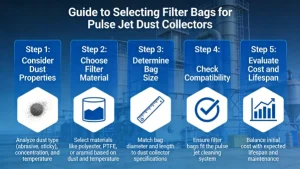
How to select the right filter bags for a pulse jet dust collector?
To select the right filter bags for a pulse jet dust collector, follow this step-by-step...
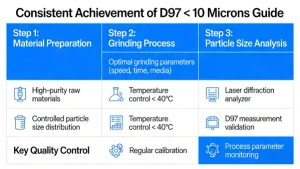
How to achieve a D97 of less than 10 microns consistently?
To consistently achieve a D97 < 10 microns (97% of particles smaller than 10 micrometers),...
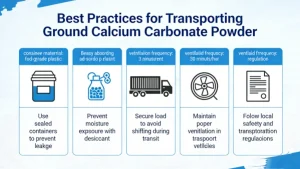
What is the best practice for transporting ground calcium carbonate powder?
Ground Calcium Carbonate (GCC) powder is generally non-hazardous (UN GHS unclassified), but requires careful handling...