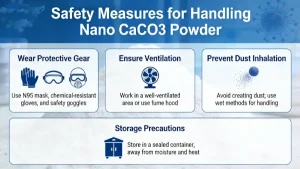
While nano CaCO₃ is chemically inert and generally low-toxic, its nanoscale size creates unique inhalation and contact hazards requiring specialized controls beyond standard dust protection .
1. Understanding the Hazards of Nano CaCO₃
| Hazard Type | Key Concerns |
|---|---|
| Inhalation Risk | Nanoparticles (<100nm) penetrate deep into lungs, potentially causing irritation, inflammation, or long-term pulmonary effects |
| Skin/Eye Irritation | Physical irritation from fine particles; may cause dryness, redness, or conjunctivitis |
| Dust Explosion | Combustible dust hazard when airborne at concentrations >20-50 g/m³ |
| Environmental Impact | Potential water/soil contamination if released in large quantities |
| Physical Strain | Heavy bags (25-50kg) pose lifting injuries risk |
2. Engineering Controls (Primary Prevention)
Ventilation Systems
- Install local exhaust ventilation (LEV) at dust generation points (unloading, mixing, grinding)
- Use HEPA-filtered fume hoods or enclosed workstations for handling
- Maintain negative pressure in processing areas to prevent dust migration
Dust Suppression
- Implement wet processing where possible to minimize airborne particles
- Use dust collection systems with HEPA filters on all equipment
- Install air curtains at entry points to prevent dust escape
Equipment Design
- Use closed transfer systems (pneumatic conveying, sealed hoppers)
- Ensure all machinery is properly grounded to eliminate static buildup
- Install explosion relief devices on process vessels (for dust explosion risk)
3. Personal Protective Equipment (PPE)
Respiratory Protection (Most Critical)
| Exposure Level | Recommended Respirator |
|---|---|
| Low (<5 mg/m³) | N95/FFP2 disposable respirator |
| Moderate (5-50 mg/m³) | Half-face respirator with P100 filters |
| High (>50 mg/m³) | Full-face respirator with P100 filters or SCBA |
- Replace filters regularly (per manufacturer guidelines or when breathing resistance increases)
- Fit-test all respirators before use
Skin Protection
- Wear disposable nitrile gloves (avoid latex due to potential allergies)
- Use impervious coveralls with hoods to prevent skin contact
- Wear anti-static footwear to prevent static discharge
- Change clothing immediately if contaminated
Eye Protection
- Safety goggles with indirect ventilation (prevent dust entry)
- Face shields for high-dust operations
- Avoid contact lenses in processing areas
4. Safe Handling Procedures
Storage Practices
- Store in sealed, labeled containers (preferably metal or conductive plastic)
- Keep containers on pallets off the floor (6-12 inches) in dry, well-ventilated areas
- Maintain first-in, first-out (FIFO) inventory to prevent material degradation
- Separate from incompatible substances (acids, which react to produce CO₂ gas)
Transfer & Processing
- Never pour nano CaCO₃ powder; use closed transfer systems
- Minimize container movement to prevent dust generation
- Use grounded scoops for small transfers
- Process in batches to control dust levels
- Avoid using compressed air to clean surfaces (use HEPA vacuums instead)
Housekeeping
- Implement wet cleaning or HEPA-filtered vacuuming (never dry sweeping)
- Clean work areas at the end of each shift
- Use dust collection during cleanup to prevent re-suspension
- Dispose of contaminated cleaning materials as hazardous waste
5. Emergency Response Procedures
Spill Response
- Evacuate unnecessary personnel
- Don appropriate PPE (full-face respirator, coveralls, gloves)
- Contain spill with absorbent materials (avoid spreading)
- Collect with HEPA vacuum or wet methods
- Place waste in sealed containers for proper disposal
First Aid Measures
| Exposure Route | Immediate Action |
|---|---|
| Inhalation | Move to fresh air; rest in comfortable position; seek medical attention if coughing/difficulty breathing |
| Eye Contact | Rinse with water for 15+ minutes (remove contact lenses); get medical help |
| Skin Contact | Remove contaminated clothing; wash with soap and water for 10+ minutes |
| Ingestion | Rinse mouth with water; do NOT induce vomiting; seek medical advice |
Fire & Explosion Response
- Nano CaCO₃ is non-flammable, but dust clouds can explode
- Use water spray to disperse dust clouds and cool containers
- Never use dry chemical or CO₂ extinguishers (may disperse dust)
- Evacuate area if explosion risk is high
6. Training & Monitoring
Employee Training
- Comprehensive training on nano CaCO₃ hazards and controls
- Proper PPE selection, use, and maintenance
- Emergency response protocols (spills, first aid, explosions)
- Safe lifting techniques for heavy bags
Exposure Monitoring
- Regular air sampling for respirable dust (OSHA PEL: 15 mg/m³ total dust)
- Monitor for nanoparticle concentrations (use specialized instruments)
- Implement medical surveillance for workers with prolonged exposure
- Keep records of all monitoring results
7. Waste Disposal
- Package waste in sealed containers labeled “Nano Calcium Carbonate Waste”
- Dispose according to local regulations for non-hazardous industrial waste
- Do NOT discharge into drains or waterways
- Recycle where possible (reuse in low-grade applications)
Summary Checklist for Safe Handling
✅ Conduct risk assessment before handling operations
✅ Implement engineering controls (ventilation, dust suppression)
✅ Provide appropriate PPE (respirator, gloves, goggles, coveralls)
✅ Follow safe storage and transfer procedures
✅ Establish emergency response protocols
✅ Train employees thoroughly
✅ Monitor exposure levels regularly
✅ Maintain good housekeeping practices
Remember: While nano CaCO₃ is generally considered low-toxic, its nanoscale properties demand heightened precautions compared to conventional calcium carbonate. Always consult the SDS (Safety Data Sheet) provided by your supplier for specific handling guidelines .