CaCO3
JACAN

what is the specific surface area of 2500 mesh CaCO₃

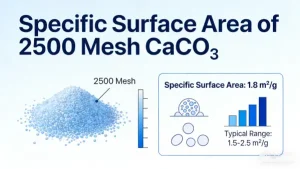
The specific surface area (SSA, measured by BET nitrogen adsorption method) of 2500 mesh CaCO₃ varies mainly based on its production process, particle size distribution, and morphology, with the following core values: 1. Standard 2500 mesh Ground Calcium Carbonate (GCC, the most common commercial type) This is the mainstream product of 2500 mesh CaCO₃ in the industry, made by mechanical grinding of natural calcite: Typicalparticlesize: Median particle size D50 ≈ 2–5 μm, D97 ≤ 5.5–10 μm (depending on grading precision) Specific surface arearange: General industrial grade (D50 ≈ 5 μm):1.8–2.5 m²/g(18000–25000 cm²/g), with a common industry lower limit of ≥2.0 m²/g Ultra-fine graded grade (D50 ≈ 2 μm, narrow particle size distribution):2.5–3.0 m²/g, with high-precision grinding products up to 3.2…

The specific surface area (SSA, measured by BET nitrogen adsorption method) of 2500 mesh CaCO₃ varies mainly based on its production process, particle size distribution, and morphology, with the following core values:

1. Standard 2500 mesh Ground Calcium Carbonate (GCC, the most common commercial type)

This is the mainstream product of 2500 mesh CaCO₃ in the industry, made by mechanical grinding of natural calcite:

  • Typicalparticlesize: Median particle size D50 ≈ 2–5 μm, D97 ≤ 5.5–10 μm (depending on grading precision)
  • Specific surface arearange:
    • General industrial grade (D50 ≈ 5 μm):1.8–2.5 m²/g(18000–25000 cm²/g), with a common industry lower limit of ≥2.0 m²/g
    • Ultra-fine graded grade (D50 ≈ 2 μm, narrow particle size distribution):2.5–3.0 m²/g, with high-precision grinding products up to 3.2 m²/g

2. Theoretical value for ideal spherical particles

For perfectly spherical calcite CaCO₃ (true density 2.7 g/cm³) with a uniform particle size of 5 μm, the theoretical specific surface area is approximately0.44 m²/g. The actual SSA of commercial products is much higher than this theoretical value, due to the irregular broken shape, edges, corners, and micro-pores of ground particles.

3. Special case: Precipitated Calcium Carbonate (PCC)

2500 mesh is rarely used to label PCC (which is usually graded by average particle size). For PCC with a particle size equivalent to 2500 mesh, the specific surface area is significantly higher, reaching5–10 m²/g, due to its porous structure and special particle morphology.

Key influencing factors

The actual specific surface area will also be affected by particle size distribution width, grinding process, and surface modification (surface coating with modifiers such as stearic acid will slightly reduce the measured BET specific surface area).
About Us:
With over 20 years of dedicated expertise in ultrafine grinding technology, we deliver high-performance machinery that matches the precision and reliability of leading German and Japanese brands—at only 1/3 of their cost.

Beyond Equipment, We Deliver Total Confidence:
We provide Free Material Testing to ensure precise equipment selection, followed by professional on-site installation and comprehensive training. Our 24/7 technical support team ensures your production line remains efficient and worry-free.

Schedule Material Trial & Get a Customized Solution from Us
can CaCO3 grinding dust be recycled
Calcium carbonate (CaCO₃) grinding dust is highly recyclable and widely reused in industrial processes, offering...
what is the pH of ultrafine CaCO3 slurry
The pH of ultrafine calcium carbonate (CaCO₃) slurry typically ranges from 8 to 10 under...
How to choose the right grinding mill for calcium carbonate
Start with a clear decision framework: first define production method (dry/wet), target fineness, and throughput,...